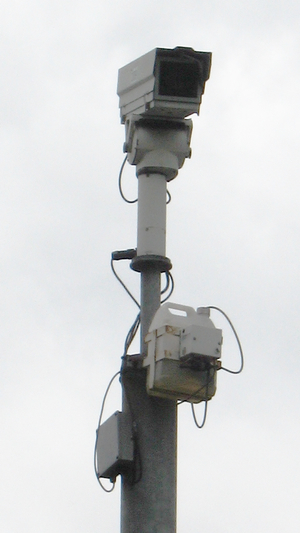
Defending CCTV

2:15pm, 18th January 2010

It’s becoming increasingly fashionable to knock the use of CCTV as if it is inherently evil. Bizarrely – since I would consider myself to be a strong supporter of civil liberties – I’ve found myself defending its use again and again.

This is partly because they have concentrated on the number of cameras, rather than how they are used – I would contend that Wandsworth’s network of professionally operated and carefully regulated cameras are not a problem, problems occur with small, private installations in which there is no control or oversight of the operator.

The council highlighted some of the successes from the CCTV network over Christmas and New Year recently, when it helped stop a suicide, rescue a man who had fallen into the Thames, guided police to developing problems and helped track a suspect who was then arrested.

But even since then two court cases have illustrated the value of properly used CCTV. First, the case of Aubrey Appiah, who was tracked on the council’s CCTV network and the evidence used to secure a conviction for burglary. The second, and more tragic, was the murder of Paul Peters, in which CCTV evidence was used to disprove his grandson’s story that he was asleep at the time of the murder.

Regulated and controlled CCTV can, and does, continue to play a key role in making Wandsworth safer – whatever the sensationalist headline writers would like to think.

Share this:
  • Print
  • email
  • Digg
  • FriendFeed
  • Facebook
  • del.icio.us
  • Google Bookmarks
  • StumbleUpon
  • Twitter

CCTV. Revisited.

2:49pm, 18th December 2009

CCTVOnce again the issue of CCTV has raised it’s head. This time it is as a result of a ‘Big Brother Watch’ press release that, I believe, totally misses the real point.

I’m afraid I don’t have a lot of sympathy for BBW (and don’t put that into Google at work). They are an offshoot of the Tax Payers’ Alliance, an organisation that, as everyone’s mother said, know the price of everything and the value of nothing. For an organisation that really cares about civil liberties I’d suggest you go to Liberty – a truly excellent organisation.

BBW put in Freedom of Information requests to 100 councils asking for the number of cameras and a copy of internal guidance. As far as I can see they don’t seem to have done anything with the guidance they received from Wandsworth or any other borough.

And that’s strange, since they acknowledge in their final report that “there is obviously a role to play for technology in general, and CCTV in particular, in law enforcement and we are not opposed to CCTV per se.”

Yet they put out a press release that condemns councils purely for the number of cameras they have and not how they use them.

It seems to me that one camera improperly used is far more dangerous than hundreds of thousands of well-regulated cameras. Which is why I’m disappointed they didn’t bother to mention that Wandsworth has a strict CCTV code of conduct which prevents use of the cameras on private areas, or that our operators are trained, hold the appropriate SIA qualifications and regularly checked by the Criminal Records Bureau.

I’m also disappointed that they didn’t bother to find out that around half the criminal cases brought in the borough use CCTV evidence, or that they didn’t ask to hear about any of the crimes our operators have prevented, or helped the police rapidly apprehend the suspects through use of the CCTV network.

And because they didn’t enquire, we weren’t able to tell them about the way the police use our CCTV to help them in targeted investigations either by working with our camera operators or putting police officers into our control room.

And it was silent on the fact that Wandsworth is inner London’s safest borough, partly due to intelligent, controlled and pro-active use of CCTV.

CCTV is not the issue, the use to which it is put is the issue. The last time this cropped up and I ended up discussing this with Liberty’s Shami Chakrabarti it was clear that the issue is not councils or public authorities that are the problem – they are well regulated and use high quality equipment. The problem are the shops, pubs and clubs that use the equipment without proper regulation, or re-use tapes so often they become useless. But, of course, they aren’t covered by Freedom of Information and don’t make for an easy Daily Mail headline.

Share this:
  • Print
  • email
  • Digg
  • FriendFeed
  • Facebook
  • del.icio.us
  • Google Bookmarks
  • StumbleUpon
  • Twitter

The pointless exercise of stop and search

9:47am, 16th December 2009

I’ve touched on police powers to stop and search a couple of times in the past. Once when I was subject to a stop – but not a search – around a year ago (although I posted about it some months later, prompted by section 76 of the Counter Terrorism Act coming into force) and again last May when the number s44 searches undertaken featured on the BBC News website.

I’ve been sat on the last statistical release from the Home Office (opens a PDF) for a while, it was covered on the BBC News website nearly three weeks ago but was prompted to dig it out by a recent YouTube video of someone being stopped for filming in London. I’m not going into any of the claims made in the film or the webpage about her treatment (nor comment on the music choice) but like the majority of those stopped under s44 – she’s innocent.

Section 44 allows a police constable in uniform to carry out a stop and search without any suspicion. According to the Home Office figures during 2008/9 there were 256,026 stop and searches and 95% of these were by the Metropolitan or British Transport Police. Essentially London is by far the place you are most likely to be stopped.

The Home Office reports that 1,452 arrests were made after a s44 stop and search – this represents 0.6% of the total. What it remains totally silent on is how many of these arrests were for terrorism related offences. My guess would be that that vast majority, if not all, were for other offences (possession of drugs or a knife, for example) discovered during a search.

The figures for s43 are no better. Section 43 is different to s44 in that it requires suspicion. The act states in s43(1) “A constable may stop and search a person whom he reasonably suspects to be a terrorist to discover whether he has in his possession anything which may constitute evidence that he is a terrorist.”

As you might expect there were fewer stop and searches under s43, just 1,643 by the Metropolitan Police. But despite the requirement that reasonable suspicion is required just 1.5% of these resulted in an arrest. Again, it remains silent on how many, if any, of these were for terrorism related offences.

So these searches represent a huge intrusion into our civil liberties without it seems, without, it seems, producing much in the way of results. It also represents a huge amount of police time which I would contend could be much better used in other ways.

The Home Office’s release makes a lot of the fact that the number of searches are falling, by 37% between 2008/9 and the first quarter of 2009/10, but this still means there will be something like 160,000 people stopped and searched – and with no reason to think the success rate of these will be any better.

Share this:
  • Print
  • email
  • Digg
  • FriendFeed
  • Facebook
  • del.icio.us
  • Google Bookmarks
  • StumbleUpon
  • Twitter

Council acts responsibly shocker

11:33am, 21st October 2009

I don’t often get the Wandsworth Guardian, so missed their sensational story that the council has used ‘anti-terrorism’ powers 300 times in the past four years until someone pointed it out to me last night.

And quite a sensational story it is: the council abused powers introduced to fight terrorism to “snoop on residents”.

Except, it isn’t true.  The powers they refer to aren’t anti-terrorism powers at all, even the article recognises the legislation is the Regulation of Investigatory Powers Act 2000 (RIPA). Now, I’m not an investigative journalist, but I’ve a vague idea the act is about investigation and, um, its regulation. Terrorism legislation tends to be pretty bluntly named, hence the Terrorism Act 2006 or the Counter-terrorism Act 2008.

So we have an act that regulates investigations. And the council investigates things all the time.

The first time I was aware of RIPA was in 2001. The council had been made aware of someone selling a set of council flat keys on eBay. For around £800 you could get the keys to the council flat, which – according to the seller – had three bedrooms, an excellent location and was yours for as long as you paid the subsidised rent. The sitting tenant was seeking to profit by ’selling’ their flat into the private sector.

So, the council had a choice:

  1. stand by, watch the auction go through, let the tenant pocket the money, have someone get a great deal on a flat and hope, somewhere down the line, they slip up and we discover them so we could use the flat for someone who really needs it, or
  2. use RIPA and authorise an officer to act as a ‘covert human intelligence source’, engage with the seller as a potential buyer and gather enough information to stop the sale and ensure the flat gets to someone who really needs it.

Seems a no-brainer to me. And I guess most residents too. And it’s exactly the same when it comes to identifying and stopping benefit fraud, misuse of blue badges, fly-tipping… any number of cases where honest residents are suffering because of the dishonest or irresponsible few.

This will be discussed at tomorrow’s council meeting apparently. The Labour Deputy Leader, Cllr Leonie Cooper promised this and told the paper: “I find it both surprising and outrageous that the council has misused a piece of legislation in this fashion. They should come clean and tell people what they have been doing and stop it immediately.”

I’m really looking forward to hearing how the council is abusing legislation regulating investigations by conducting regulated investigations and protecting public money.

But of course, that doesn’t make good headlines or knee-jerk quotes knocking the council.

The key here, as it is with CCTV, is not that we are conducting investigations – it would be criminal if we weren’t trying safeguard your money – but that when we do we carry them out properly.

Share this:
  • Print
  • email
  • Digg
  • FriendFeed
  • Facebook
  • del.icio.us
  • Google Bookmarks
  • StumbleUpon
  • Twitter

Weekly wrap-up, 24 July

1:52pm, 24th July 2009

My usual end of week wrap-up of bits and pieces I want to highlight or didn’t post about at the time.

Pre-summer council meeting
Wednesday saw the council had it’s last full meeting before the summer recess. Of course, the council doesn’t take a holiday in the same way that Parliament does, but there’s a break in meetings during August before starting again in September. And, like any large organisation, things get a little quieter because of holidays.

The July council meeting always seems to reflect a pre-summer lethargy. I’d always blamed the bad ventilation in the Council Chamber, which made it hot and stuffy in July. But following the collapse of the roof and our move to the Civic Suite I discovered that July is a flat meeting for other reasons.

The debates lacked spark (despite some excellent contributions on our side) and the meeting was other remarkably quickly for a full council.

Of course, there’s also a slight lull because everyone knows that a general election is coming and whatever there are going to be major spending cuts, but politics means that neither party can really address these. Hence the ridiculous language of “0% raises” from Gordon Brown and endless offers of cash that, mysteriously, end in 2010/11 (thus making the next guy seem like the scrooge).

This affects councils of every political complexion, not just Conservative, and while it might make for interesting politics, it’s not the way a country should be run.

CCTV
I can’t not mention the debate, opened up by the BBC, on CCTV cameras. It is definitely an interesting one; but what I found fascinating (as well as a little reassuring given my feelings on civil liberties) was the common ground I had with Shami Chakrabarti on them when I did BBC Breakfast. It might be a strange alliance, but I think it was something of a victory for common sense. As is often the case, it’s not the sensationalist headline, but the detail behind it. It doesn’t really matter how many cameras any organisation has, it’s the controls behind them that counts.

Surgeries
Another bit from the last week I’m rather pleased with is the discussion started on this blog and continued here, here and elsewhere, about surgeries. Yes, it might seem a minor issue – over the course of the year it’s only 150 man-hours in Wandsworth – but it’s good to see that a blog can start a little debate which, I hope, might lead somewhere.

Meeting the police
This week also saw one of my more formal meetings with the police. While I seem to see them fairly often, one way or another, I do have a regular session with the Borough Commander, Chief Superintendent Stewart Low so we can both catch up with what each side is doing.

Obviously a lot of the meeting is not for repeating here. However, one thing did come across clearly (and shows in the crime maps on this site) is that the recession is having an impact on crime. This is not just a Wandsworth phenomenon, it’s happening across London and the rest of the country.

Burglary is one of the crimes that really seems to be on the up. While the police are doing a great job there’s still a lot we can do to avoid becoming a victim of crime. The Met’s crime prevention pages and the Council’s Community Safety Division both suggest lots of ways you can make yourself safer.

Share this:
  • Print
  • email
  • Digg
  • FriendFeed
  • Facebook
  • del.icio.us
  • Google Bookmarks
  • StumbleUpon
  • Twitter

Why Big Brother isn’t the problem with CCTV

3:37pm, 17th July 2009

CCTVAt the end of last week I found myself at the top of Putney High Street doing an interview for Newsnight about CCTV.

Following a series of freedom of information requests the BBC had discovered that Wandsworth had the highest absolute number of CCTV cameras of any local authority (although the Shetlands are the most surveilled per capita) so I was there defending the council against the inevitable charges of Big Brother.

Now you might assume I’m anti-CCTV. I’ve posted on civil liberty issues in the past and surely this follows through with CCTV… well, yes and no.

It might be there is some cognitive dissonance at play here, with me trying to reconcile a civil libertarian streak with a portfolio of hundreds of cameras. But while I think there can be serious issues with CCTV, I think that Wandsworth are getting it right.

Many of the arguments are around issues like privacy. I’d argue it’s hard to be private when you are walking along a busy high street. If you are in plain view, it doesn’t make much difference whether you can be seen by a man on the other side of the road, or by a man operating a camera on the other side of the road.

In fact, when you start examining the argument it is not the CCTV itself that is the problem, but to what use that CCTV is put.

And this is the real nub of the matter. It is, frankly, irrelevant how many cameras there are in Wandsworth. What is relevant is the way we use them, and also the way we don’t use them.

CCTV is a tool. Nothing more, nothing less. In some places it is appropriate to use it, in others it is not. So in Wandsworth we have CCTV installed in town centres, but have a policy not to install in residential areas, and have a very strict code of practice regulating how we use it where installed – you’ll never see a Wandsworth recording featured on Police, Camera, Action.

In return we have an incredibly valuable resource. Around half of all prosecutions brought by the police use CCTV footage as evidence. And it helps beyond crime. The council’s well trained CCTV operators have found lost children and prevented suicides.

My concern with CCTV is that far too many people see it as a panacea. So, for example, if there is a problem with anti-social behaviour residents assume installing CCTV will solve it. In fact, it’s only likely to move it, meaning that someone else will start facing exactly the same problems. Whereas there are probably all sorts of other things that would deal with it. The police might patrol and area, the council’s youth services could engage with youths, it might just be that a little mutual understanding and dialogue will make all the problems disappear overnight.

And at its worst it stops people taking responsibility for their own lives. For example, we’ve been asked to install CCTV in a residential area to prevent burglary, not because there was a particular problem, but as a preventative measure. Naturally, we offered the usual security advice (there is a lot you can do, very cheaply, to secure your home) but it is concerning that people’s first thought was not to fit window locks or a London bar to their door, but to request their area be covered by a CCTV scheme.

And that is my biggest fear for CCTV. Wandsworth has shown that with robust controls CCTV can be a valuable tool in the fight against crime and making Wandsworth the safest inner London borough. We need to make sure that the price we pay isn’t a loss of personal responsibility.

What do you think?  Do we have too much CCTV?  Or don’t we have enough?

Share this:
  • Print
  • email
  • Digg
  • FriendFeed
  • Facebook
  • del.icio.us
  • Google Bookmarks
  • StumbleUpon
  • Twitter

Can anyone claim section 44 works?

1:05pm, 15th May 2009

With the blanket coverage of MPs’ expenses late last week I almost missed a BBC News story about stops under section 44 of the Terrorism Act 2000

The article contacts a few facts and figures about how effective section 44 has really been.

  • In London during 2008 there were more than 170,000 searches conducted
  • Of these just 65 (0.035%) led to arrests for terror offences
  • The Home Office, Department of Justice and Met are “unable to say” if anyone had been charged or convicted as a result of a search.

They are staggering figures, essentially around 2,600 searches need to be conducted to get one terror related arrest.  You can argue that those 2,600 searches act as a deterrent, but I think there’s a stronger argument that the police time taken to conduct 2,600 searches would be more effectively spent on intelligent policing.

Assuming five minutes and two officers per search my back of the envelope calculation is that, including holidays, it’s about three months of police time for each arrest – and it would seem that those arrests haven’t led to any charges.  You shouldn’t assess police effectiveness on arrests alone, but I can’t help but think it isn’t an effective use of police time.

And the real question, why has a supposed temporary power been in force for eight years when it’s so ineffective?

Share this:
  • Print
  • email
  • Digg
  • FriendFeed
  • Facebook
  • del.icio.us
  • Google Bookmarks
  • StumbleUpon
  • Twitter

Why I’m a terrorist…

2:07pm, 17th February 2009

lavender-hill-police-stationI have tended to shy away from national politics and issues in this blog, keeping it more focused on local and council issues. However, one subject that increasingly concerns me is the erosion of civil liberties in this country. Yesterday saw another little chunk of our freedoms eroded with section 76 of the Counter Terrorism Act coming into force.

Photographers must now be a careful they don’t get the police in their photos for fear of arrest.

I have an interest in this because I have already (late last year, before s76 was in force) been stopped by the police for taking a photo.  I was on Lavender Hill and my sin was to get a police car in a photo taken near Lavender Hill police station.  Four officers questioned me because, apparently, my behaviour was suspicious – something I refused to acknowledge (though I would later admit it was a truly awful photo, bad framing and a bit of camera shake).  I suppose you could argue that Al-Qaeda don’t realise those white cars with orange stripes are the police.  I think it a bit unlikely.

This is already a remarkably common occurence.  Within days of being stopped myself, I heard, through friends, of two other people who had been stopped and searched under section 44 of the Terrorism Act for taking photos at Clapham Junction.  It seems that even before section 76 you had to be worried if you were innocently taking a photo.

I would stress I do not blame the police for this.  They have to act according to the laws the government makes, and they have to fulfil their targets.  The people I do blame are the government.  And I’m not alone in this – Stella Rimington, a former head of MI5, today saying that Ministers are using the fear of terror to restrict civil liberties.  One of her comments deserves quoting in full:

It would be better that the government recognised that there are risks, rather than frightening people in order to be able to pass laws which restrict civil liberties, precisely one of the objects of terrorism – that we live in fear and under a police state

Now you can argue that, of course, they aren’t going to be stopping the innocent tourist or hobbyist photographer.  So what’s the point of the power?  I’m guessing the average terrorist tries to blend in rather than look like a terrrorist, which implies the police are either going to have to question lots of innocent people in the hope of catching a terrorist, or they are going to have to rely on other intelligence.  If the latter is the case, then why do they need powers like those given under the Terrorism Act 2000 and the Counter Terrorism Act 2008?

Many years ago I would have said that a police state could never happen in this country.  Nowadays, it seems the Blair and Brown governments don’t just want to show that it could, they are actually working to make it a reality.

Share this:
  • Print
  • email
  • Digg
  • FriendFeed
  • Facebook
  • del.icio.us
  • Google Bookmarks
  • StumbleUpon
  • Twitter